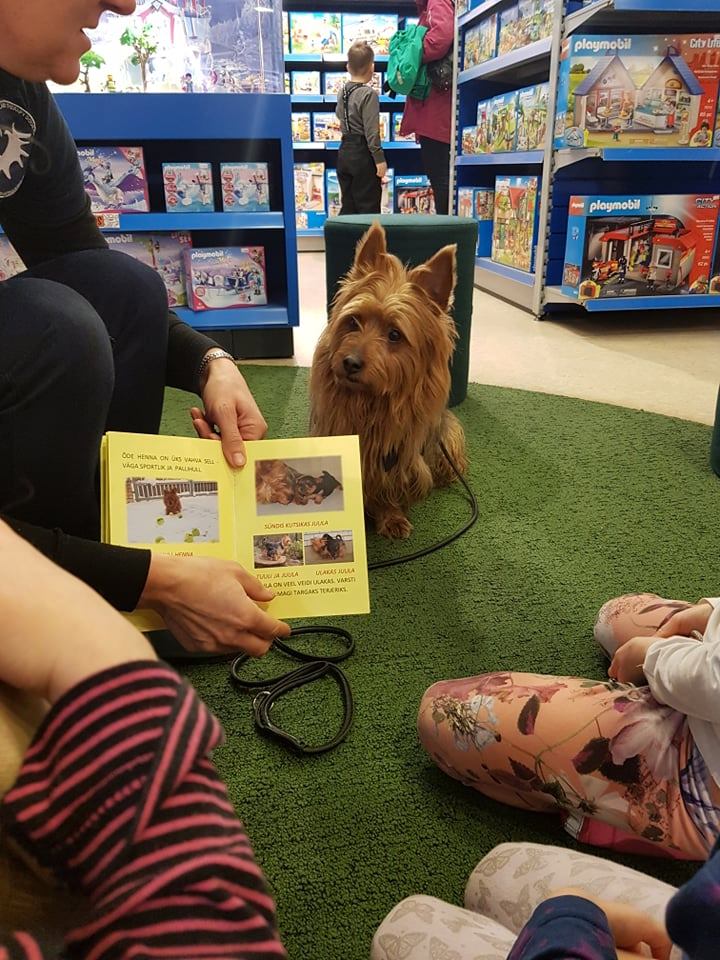
In Estonia, this canine curiosity has been translated into an educational tool through the lugemiskoer (reading dog) program. What started as a small pilot project in 2013 at the Tallinn Central Library, with a husky named Susi, has grown into a nationwide program. Today, nineteen dog teams work across libraries and schools, coordinated by the NGO Estonian Assistant and Therapy Dog Association (Eesti Abi- ja Teraapiakoerte Ühing).
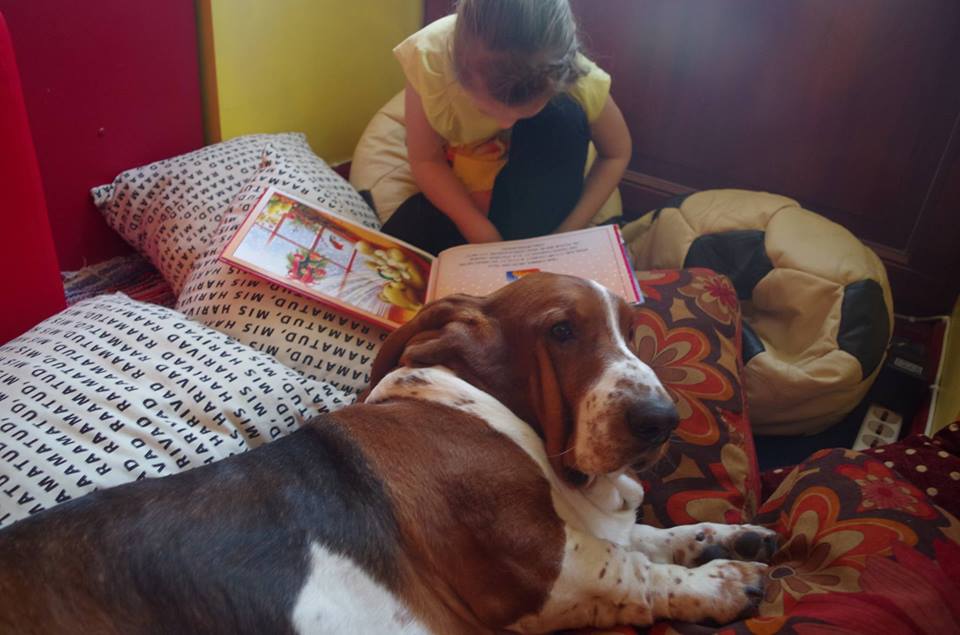
The concept is simple. Children read aloud to a dog. Unlike humans, dogs don’t judge. They don’t interrupt to correct a mispronounced word, and they don’t lose patience when a child stutters or pauses to spell out a difficult syllable. As Maarja Tali, a pioneer of the program and whose dog was Susi, explains, “The reading project is one of those where a child who has difficulty learning to read can [do so] with a friend and without stress.” This stress-free environment is crucial for children who may have developed anxiety around reading in traditional classroom settings.
The impact of these four-legged listeners is major. Parents report that children who previously refused to open a book are now voluntarily taking books home to practice. One parent, Kristiina Nikkel, shared that her daughter had refused to read until meeting Susi. After a few sessions, her daughter’s apprehension vanished, and she now reads fluently.
The program is also a beneficial tool for integration. At the Tallinn Central Library’s Department of Literature in Foreign Languages, children whose mother tongue is not Estonian can practice their language skills with a reading dog. This provides a safe space to navigate a new language without the fear of social embarrassment.
Not just any dog can become a lugemiskoer. Each dog team must pass a suitability assessment and undergo a two-day introductory and theoretical course, followed by a therapy dog exam. The human handlers are also trained to document and analyze the readers’ progress…
The program’s success is dependent, of course, on its rigorous standards. Not just any dog can become a lugemiskoer. Each dog team must pass a suitability assessment and undergo a two-day introductory and theoretical course, followed by a therapy dog exam. The human handlers are also trained to document and analyze the readers’ progress, ensuring each fifteen-minute session is as effective as it is enjoyable.
While the primary focus is on children, the benefits of reading dogs extend to university students. At the University of Tartu Library, the “Night Library” program has introduced dogs during exam periods. Students can read their lecture notes to dogs like Mona, the Labrador, or Tentel, the Afghan Hound. These interactions help lower blood pressure and reduce the intense stress of exams.
The Estonian reading dog program has transformed libraries to become a type of canine reading club in addition to their special role as temples of knowledge. It makes a great deal of sense, considering the unique bond between humans and dogs and what we’ve seen dogs achieve as service animals in other situations. Sometimes we need reassurance, and the lugemiskoerad are there to listen.
You can follow along with these dogs who make the world go ‘round through the Lugemiskoerad Eestis / Reading Dogs in Estonia Facebook and Instagram pages.