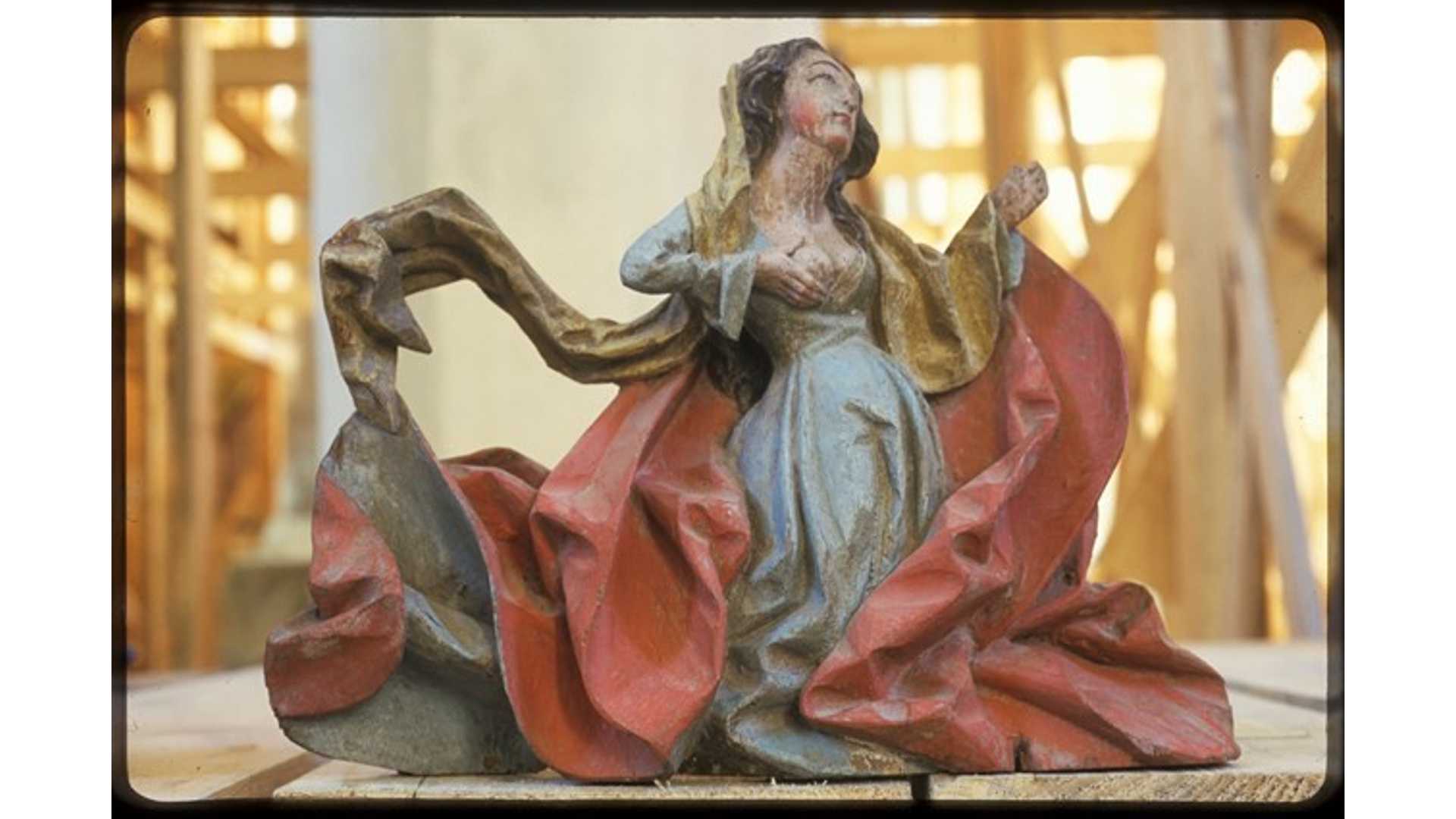
639 artifacts are listed, taken primarily from churches. Icons, crosses, candlesticks, silver plates and chalices, sculptures, chandeliers, brass sconces pulled from walls, and even bronze tower bells. Some of these objects were stolen in the 1970s, a majority of them were taken in the 80s and 90s, and some were stolen during the early 2000s.
One listing shows several painted wooden sculptures from the early 16th century that were taken in February 1999 from St. Peter and St. Paul's Lutheran church in Kaarma, on the island of Saaremaa.
Multiple listings come from an Estonian Orthodox church in the town of Valga, southern Estonia. Here, four separate acts of burglary were committed between 1983 and 1997, and countless icons and other items were lost.
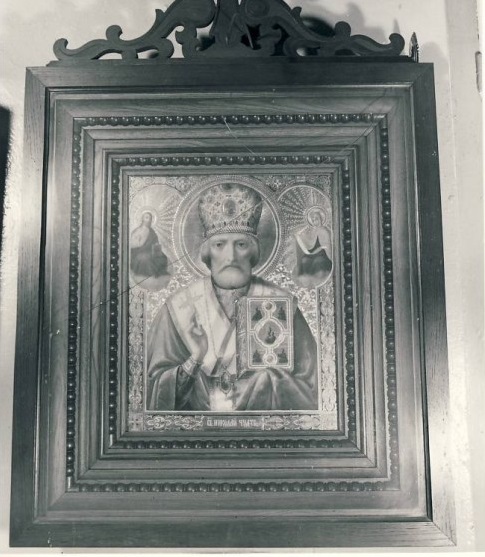
The reality is that for a church in a smaller town, historically, there hasn't been much security in place to prevent theft.
Each database listing includes photos and more details to assist in the location, identification, and return of artifacts. However, their return is unlikely. An object may leave the country and change hands multiple times.
In a Postimees report from 2016, Linda Lainvoo, chief inspector of art heritage at the National Heritage Board, explained that one stolen artifact is typically recovered each year. She has concluded that hundreds of them have been taken all the way to Germany, Belgium, and the Netherlands, with stolen icons potentially selling for thousands of Euros.
In these sales, pieces of Estonian history are lost. Objects that have played a role in the spiritual traditions and heritage of Estonians have vanished. Is there hope to be found elsewhere for the return of items of cultural importance if they are identified?
In March 2020, the University of British Columbia hosted a seminar regarding the Repatriation of Ceremonial Objects and Human Remains under the UN Declaration on the Rights of Indigenous Peoples. Among the seminar's topics was a discussion of the way museums around the world have illegally and unethically taken Indigenous ceremonial objects for their collections, and examples of the repatriation process that involve Indigenous advisory committees.
After the sacred items were lost for 93 years, Letendre's community sought repatriation of the items from the Smithsonian Institution in the United States in 2019. But the process required to repatriate the items is time-consuming and expensive.
One of the event's speakers, Liz Letendre, from the Alexis Nakota Sioux Nation in Alberta, reflected on her community's loss of sacred belongings, which hold significant familial, spiritual, linguistic, and cultural value. After the sacred items were lost for 93 years, Letendre's community sought repatriation of the items from the Smithsonian Institution in the United States in 2019. But the process required to repatriate the items is time-consuming and expensive.
In contrast, the Government of Canada has indicated that in March 2021, it returned to Egypt “…a small bronze figurine of a cat, representing the Egyptian goddess Bastet, believed to date from the Late Period to beginning of the Ptolemaic Period (roughly 664-323 BCE)…” This was done in accordance with the UNESCO 1970 Convention on the Means of Prohibiting and Preventing the Illicit Import, Export and Transfer of Ownership of Cultural Property.
If international discussion and regulations can enable the repatriation of ancient artifacts, then there must be a way for that same discussion and regulation to accelerate the repatriation of more recent culturally significant objects, especially if they are an important part of people's lives today.
Beyond this, though, there must be more done to inhibit the climates of opportunism and manipulation that result in the theft of objects like these. Their value goes far deeper than what can be assessed monetarily. Within each object, you may find the legacy, knowledge, beliefs, and dreams of the people whose lives that object is part of.