Les Paul built “The Log” in 1939, an experimental partially solid body guitar, mostly consisting of a block of pine with a neck, strings, and pickups; intended to solve problems of feedback and sustain. Fender followed with the solid body 1949 Esquire and 1950 Broadcaster/Telecaster, facilitating more focused, punchy sound. Among early electric guitar masters were jazz cat Charlie Christian and Sister Rosetta Tharpe, who by 1947 was playing electric guitar in gospel and pop contexts, pushing the timbre and volume beyond what had come before her.
So by the time rock and its descendent British beat became global phenomena in the 1950s and ‘60s, the electric guitar was already a symbol of rebellion and sonic possibilities.
Models like the Tonika are considered some of the worst of all time…[with] “high action, terrible intonation, brass frets that easily wore away, an alien body shape, unbalanced weight, unreliable electronics, and non-serviceable hardware.”
The growth of that symbol in Estonia during Soviet occupation was held back, based on a system that tightly controlled imports, including cultural and consumer goods. Musical equipment like electric guitars, amplifiers, and drum kits were heavily associated with the US and its culture. At first, electric guitars were not much in demand, because the associated music was simply not getting around. Once manufacturing of electric guitars started in the mid ‘60s, luthiers behind the Iron Curtain had to start from scratch, and the results were not pretty. Models like the Tonika are considered some of the worst of all time. Online music marketplace Reverb describes the guitars as having “high action, terrible intonation, brass frets that easily wore away, an alien body shape, unbalanced weight, unreliable electronics, and non-serviceable hardware.”
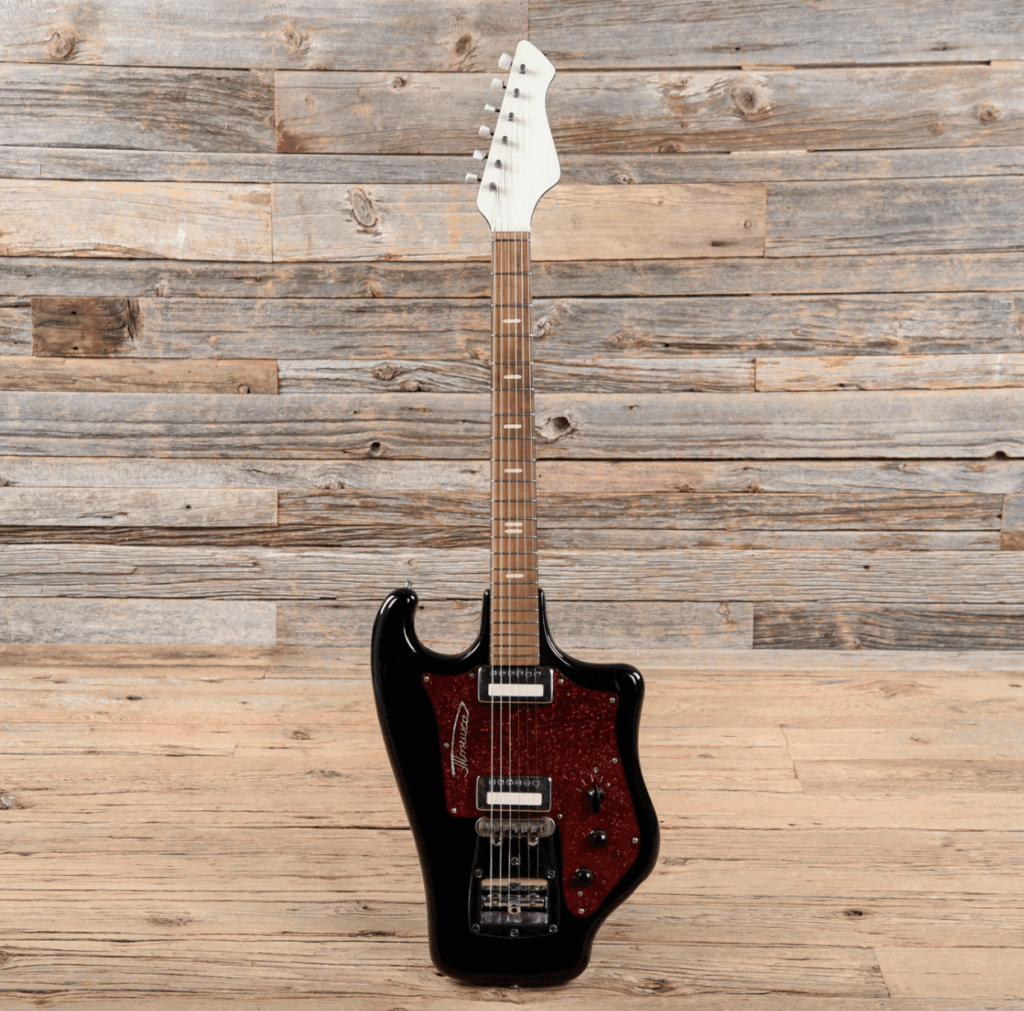
According to a 2012 article in Ajakiri Kitarr, electric guitars found in Estonia had very heavy bodies, made of beech or pine, often covered in thick black polyester lacquer. The necks (“kaelad”) were typically made of beech. Fingerboards had an unfinished veneer that became dirty quickly. Hardware was rudimentary and inconsistent. Electronic pickups were either noisy, weak, or difficult to adjust. Research by Karl Anton at the University of Tartu further indicates how biit ansamblid (beat bands) of the 1960s in Estonia faced “tehnika puudumine,” a lack of proper equipment. If buying a guitar wasn’t an option, people built or modified guitars from “lauajupid” (“table scraps”) or whatever wood pieces were at hand. Even if someone built a guitar or bought one locally, amplification, drum kits, and other such equipment needed to perform was difficult to procure as well. Sometimes PA systems were homemade. Punk band J.M.K.E., who referred to themselves as the worst-equipped band in Estonia, used a drum kit bought in Riga for twenty Rubles. That’s equivalent to about 120 CAD today, which would get a couple of rusty drum shells on Facebook Marketplace.
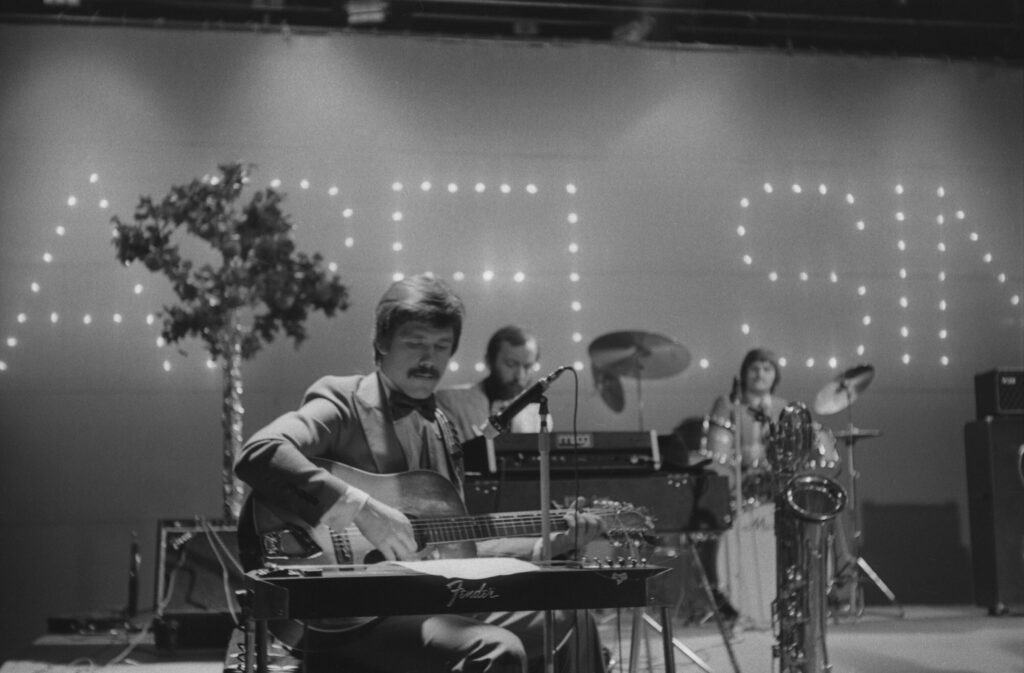
Still, some foreign equipment seems to have slipped through, perhaps for bands in more publicized settings. Examining concert photos of a Propeller concert in the 80s shows concert toms (without a bottom head) on stage, parallel to what was being played elsewhere at the time. A photo of Apelsin in the 70s shows a Moog synthesizer and a Fender pedal steel guitar. In other photos, major brand names are difficult to spot.
Gear aside, stories abound about Estonian bands (and listeners) who dared to rock. People risked arrest when purchasing bootleg “ribs records” made on x-ray film. Estonians tuned into low sound quality broadcasts of Radio Luxembourg. A student might have had access to guitar lessons, but could have gotten in trouble if they performed louder, aggressive, emotive music. Early rock bands in Estonia had to overcome obstacles like getting permission to perform. But as outside influence found its way in, there was no stopping it. Even guitarist Heiki Mätlik played in a band that covered the Beatles and Creedence Clearwater Revival before he committed to classical music.
As pointed out in essay by anthropologist Dr. Terje Toomistu in “Such a Strange Vibration: Rock Music as the Affective Site of Divergence among the Soviet Estonian Nonconformist Youth,” “the starting point of divergence for these young people was the influence of western rock music…” A couple of songs on the radio led to an interest in new guitars. Then artists who had something to say formed groups, like Ruja, Virmalised, and Magnetic Band. Eventually, there was no choice but to modernize and for restrictions to loosen.
What emerges from Estonia is a story of a build-up of resistances. In some parallel universe, it was built on something other than rock music. Regardless, when a network of like-minded people assemble, even the most ironclad authority is not invincible.