Consider the small, jagged red line that appears beneath some of our names in a digital document or text message. To a word processor, several Estonian names are “mistakes” that ought to be flagged and corrected. Until you manually right-click and “add to dictionary,” your own name remains a typo in the eyes of your computer. This digital erasure is, in a way, a prompt to conform, suggesting that anything outside the standard lexicon is an error. But our names are not errors.
This feature represents a broader, subtler pressure we face in an Anglo-centric world. That is, the urge to smooth out the phonetic edges of our heritage to make things easier for everyone else.
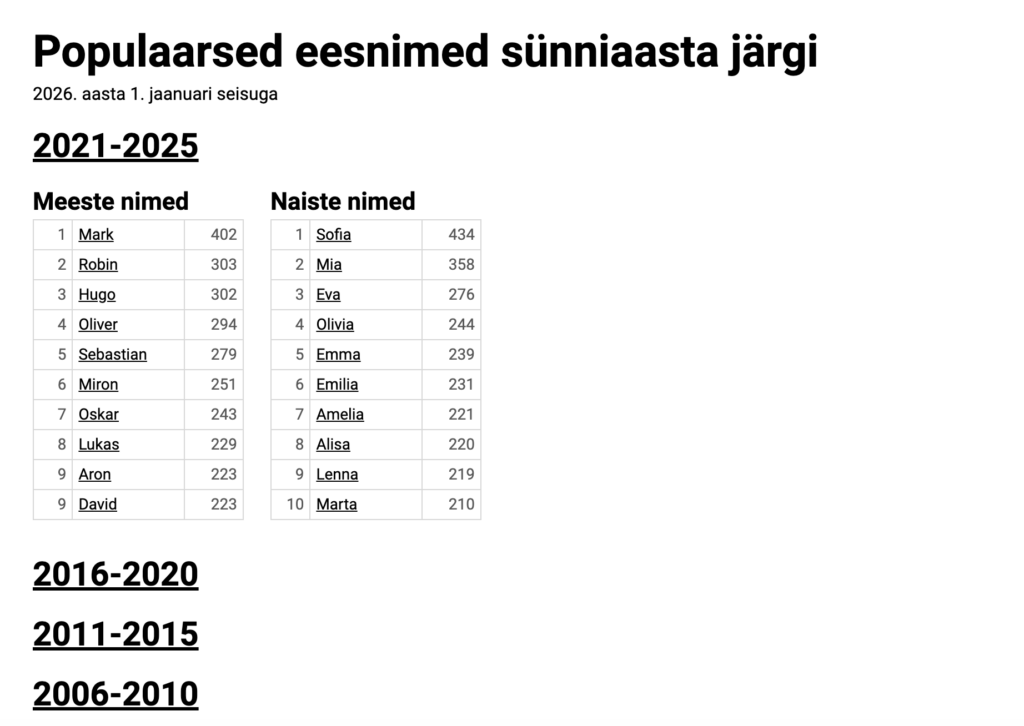
Pronunciation is often treated as a technicality, but when you dig into it, it’s also a mark of respect. When we attempt to say a name as it was intended, especially of a living being, but also places and things, we acknowledge the history behind the sounds. Even though names carry sentiment and memories, for many families in the Estonian diaspora, choosing a name involves a strategic calculation. We look at a name like Marju or Taavi and see graceful, traditional choices. Then we start to wonder if a teacher will see two vowels and stumble, or if classmates will turn heritage into a punchline.