Subscribe Menu

Is the S.V. Salme the Cape Ray wreck?

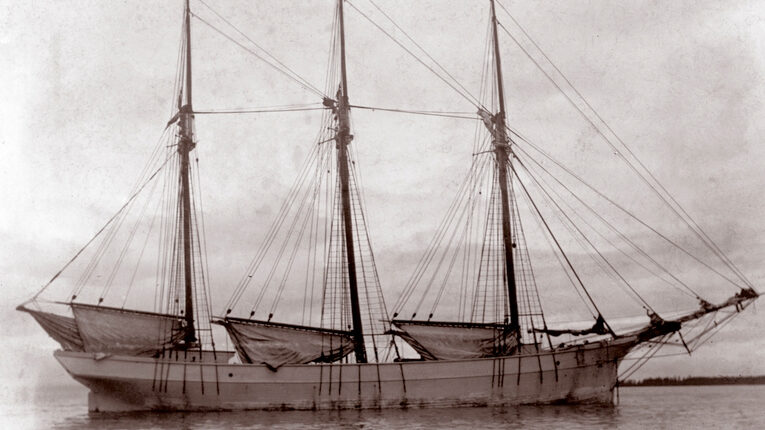
Joosep Kristenbrun (1839-1917) was my great-great-uncle who had hired a Finn, A. Justi, to build a custom schooner, the 3-masted tall ship, cargo capacity 299 BRT., 278 NRT, DWT-400 Ton, which was finished 1890/91 in Käsmu located on the north central coast of Estonia. 

Käsmu ship Salme.

At the age of 51 Kristenbrun invested all his savings in the ‘Salme.’ In 3 years he recovered his initial investment, and by 1911 he was the majority owner of 20 tall ships. There was a vast common pine forest next to Käsmu and Baron Dellingshausen, ruling landlord of the area, allowed his ‘talu pojad’ subjects, and particularly his good friend Joosep Kristenbrun, to log it, on condition the loggers cut a healthy percentage of wood for him. 

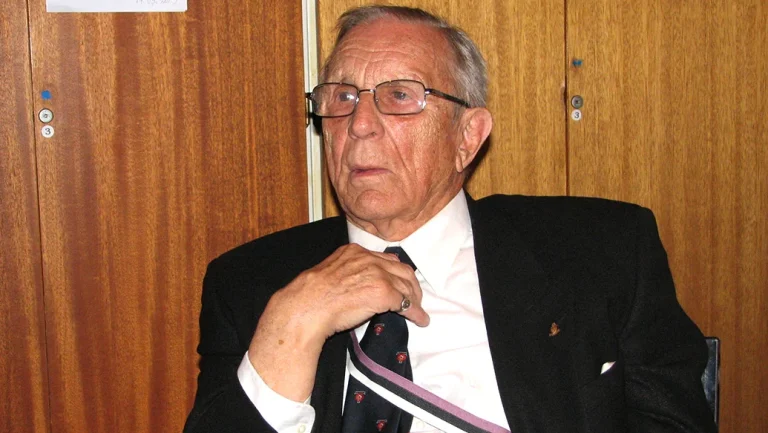
Joosep Kristenbrun

‘Salme’s’ first captain was Jüri Sandström from Pärispea, and with a crew of 8 on her maiden voyage, she was the first Käsmu built tall ship to sail across the Atlantic to North America. Seven years later on a trip from America to England, Capt. Sandström fell ill. He didn’t trust his first mate so despite his fragile health he worked when he shouldn’t have. In a storm, he asked his men to wrap him in bed sheets and carry him up on deck so he could take care of things. He gave his last order as the ‘Salme’ headed toward Falmouth in the English Channel. Waiting for docking instructions and hearing the anchor being lowered, he closed his eyes and died August 14, 1898. He’s buried in the seaman’s cemetery on the Isle of Wight. Sir John Pitka, Commander of the Estonian Navy in the Estonian War of Independence, during his years as a tall ship captain knew Jüri Sandström, sought his advice when he purchased his first tall ship ‘Ebba’ and described him as an honourable man. High praise.

In October 1915 the wooden ‘Salme’ had left Campbelltown, New Brunswick heading to the United Kingdom with a cargo of wood, her final destination was Hull. On board were Estonians, Capt. Joost Paadimeister, 51; Jüri Helberg, 23; Johannes Nikkas, 26; Rudolf Helberg, 19; Bernhart Oscar, 16; and two Spaniards in their 20s, Scheko Aleksander and Perety Franck. The ‘Salme’ capsized in a storm leaving the crew clinging to its hull. (One Estonian sea captain once wrote, water flooding a cargo of wood unstabilizes a vessel making it very difficult to control.) Fortunately, the seamen were rescued on October 14th by the s.s. Tronto and taken to New York City, arriving there October 23rd.

Capt. Jüri Sandström

The location of Salme’s capsize is not known, however, she left Campbelltown heading to the United Kingdom, travelling in waters north or south of Newfoundland, so there may be an itsy-bitsy chance of the wreck found at Cape Ray, Newfoundland being the remains of the ‘Salme.’ The ‘Salme’ would have been made of pine as were all Käsmu tall ships. Since pine is a soft wood and subject to rot, shipwrights filled holes and cracks with pegs, then applied pine tar as a sealant. Pine stumps were cut up and heated in a tar oven set on a slope with a chute to catch the liquid in a cast-iron receptacle. When it was time to apply the pine tar, the resin was reheated to its liquid-form and brushed on to waterproof the vessel.

The findings on the wreck at Cape Ray by marine archaeologists will hopefully give sufficient information to solve this exciting mystery. 


Schooner sailing vessel Salme

Read more